
Operator · Founder · Builder

I build businesses. And fix the things that stop them growing.

I run and build businesses across recruitment, business intelligence and AI, and I work directly with owners when growth, people or operating systems need fixing.

Founder of Easy Talent  ·  Fractional People & Commercial Director  ·  Built Clarity Intelligence and Recruitment Intelligence

Louis Borhani
Who I am

Most of what I've built exists because I needed it in a real business first.

I started in recruitment. That is where you learn, quickly and unforgivingly, that most commercial problems are people problems wearing a different coat. A pipeline that stalls, a team that churns, a manager who was promoted and never taught how to manage: these are the same problem viewed from different corners of the business.

So I stopped advising and started operating. I have run multi-million pound businesses, managed hundreds of staff across multiple sectors, and worked with everyone from entry-level hires to the C-suite. Running something is a different discipline from recommending it. You carry the payroll, the compliance, the client who is unhappy on a Friday afternoon, and the decision nobody else wants to make.

Easy Talent came out of that. Then the products came out of Easy Talent, because the same friction kept appearing and buying software to fix it kept disappointing me. If you have run the business, you know which problems are actually worth solving, and you build a narrower, more useful thing than somebody designing from the outside.

That is still how I work. I operate businesses, I build the systems they need, and a small number of times a year I go and do the same thing inside somebody else's company.

Why listen to me

The useful part is the combination, not any one of them.

Plenty of people know recruitment. Plenty know operations. Fewer have carried both, and then built the software underneath them.

Operator,
not observer

Multi-million pound businesses run directly, and hundreds of staff managed across multiple sectors. Not a deck about how it should be done.

Builder,
not commentator

Clarity Intelligence is live. Recruitment Intelligence is built. Workforce software sits inside Easy Talent. Each one started as a problem I had.

Diagnosis and
implementation

People, commercial, operations and technology are one problem in an owner-managed business. I work across all four rather than handing you a report at the boundary.

What I've built

Things I built because I needed them.

Each one started as friction inside a business I was running, not as a product idea.

01
Recruitment and workforce infrastructure

Easy Talent

The problem. Staffing the sectors that check credentials before they check price is mostly administrative friction: availability, compliance, right-to-work, bookings, last-minute replacement. Most of that work is manual, and most agencies treat the technology as an afterthought bolted onto a phone call.

What it is. A high-compliance specialist supplying catering, facilities, cleaning and hospitality staff into education and the public sector. Recruitment judgement, the workflow around it, and booking and workforce software built directly against the problems the business actually hits, rather than bought in and worked around.
Tell Easy Talent what you need →
02
Business intelligence · live product

Clarity Intelligence

The problem. An owner can work extremely hard for years and still have no clear view of how much of the business depends on them personally, where the commercial risk actually sits, or what would survive if they stepped back. The information exists. It is just never assembled into anything you can look at.

What it is. Fifteen straight questions, about four minutes, and a real score across the same four pillars used on Clarity Advisory Partners: Finance & Performance, Commercial, Operations and People. It is not a valuation, an audit or regulated advice, and it does not replace your accountant, solicitor or adviser. It tells you where the business is weak while you still have time to do something about it.

Review my business health, £49 → Thinking about selling? Free scorecard →
03
Recruitment intelligence · product

Recruitment Intelligence

Would your CV actually get shortlisted for this job?

The problem. Candidates are told to "tailor your CV" with no idea what that means against a specific job. Employers write a job description in ten minutes and then wonder why the applications are wrong. Both sides are guessing at the same document, and neither is ever shown the judgement that decides the outcome.

Why I built it. Running a recruitment business means reading CVs against real roles every day, and writing the roles those CVs are answering. The read that produces a shortlist is not complicated and it is not a secret. It is just never written down for the person it affects. A candidate finds out by silence; an employer finds out by a month of wrong applications. Both of those are avoidable before anything is sent.

What it is. Put in a CV and the exact role, and get an evidence-based read on where it genuinely matches, where it does not, the shortlist risks, and the changes worth making, with a tailored CV rebuilt only from evidence already in your own. It will not invent experience you do not have, because that is what gets found out at interview. Employers get the same judgement in reverse: a role analysis, a job description people understand, screening criteria and interview questions. Recruitment judgement applied to a specific job, not a generic AI rewrite.

See Recruitment Intelligence →
How I work

I got tired of AI tools that knew nothing about the rest of the business.

Most businesses already hold what they need to know. It sits in inboxes, spreadsheets, last quarter's decisions and somebody's head. The tools bolted on top know none of it, so every question starts from zero, the same decisions get made twice, and nothing compounds.

So I started building an operating layer instead of buying more tools. Information becomes intelligence, intelligence becomes capability, capability produces action, and the result of that action is kept rather than thrown away.

Information Intelligence Capability Action Learning

A business that remembers what it knows.

Research

From a market question to a mapped opportunity, with the reasoning kept rather than lost when the tab closes.

Sales

Intelligence turned into named target organisations, a real reason to approach each one, and follow-through that actually happens.

Operations

Decisions, actions and institutional knowledge preserved, so the business stops depending on who happened to be in the room.

Product

An operating problem turned into working software. It is how Clarity Intelligence and Recruitment Intelligence both started.

Show me what this could look like in my business
Thinking

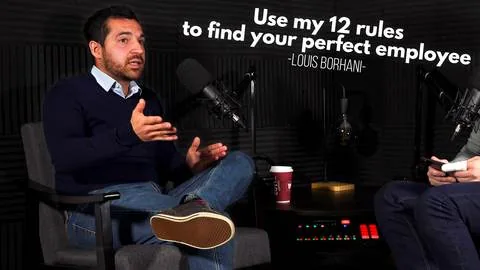
Working through it, on camera.

Recorded straight, not scripted for a studio. Mostly the arguments I end up having anyway.

Use my 12 rules to find your perfect employee

Recruitment agencies vs sustainable resourcing

If a placed candidate leaves after the guarantee period, you have already paid the fee and get no rebate. What Easy Talent builds with you instead is long term: the team grows with you rather than resetting to zero.

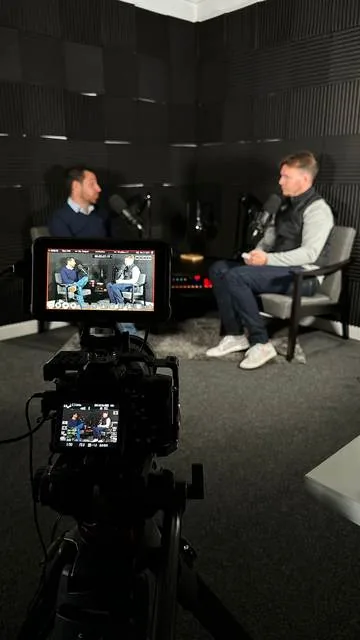
A podcast episode being recorded: two people talking in a sound-treated studio, seen past the camera
Where the episodes get made.
Recruitment & hiring
Why panic hiring always costs more than planning ahead.
Recruitment & hiring
What actually happens when a hire falls through with no notice.
Recruitment & hiring
The real difference between staffing and resourcing.
Sales & commercial
Why your pipeline and your hiring plan are the same problem.
Leadership & operating
What keeps you motivated when the numbers don't.
Leadership & operating
What sixty focused days can actually change in a business.
Culture & people
Why people leave good jobs anyway.
Operating reality
Why remote work fails in roles it was never built for.

Business and growth episodes go out on Instagram, recruitment and career episodes on TikTok, written pieces on LinkedIn. The ones worth keeping will live here.

Get the useful stuff in your inbox

Two emails. Two different audiences. Choose what’s relevant.

One confirmation email, then only what you asked for.

The gap isn't the diagnosis. It's who's left to implement it.

A pattern from real work with owner-managed businesses.

Work with me

Some problems don't fit inside a product.

A few times a year I work directly inside an owner-managed business, where the problem crosses people, commercial performance, operations and technology at once, and the honest answer is that no diagnostic is going to fix it on its own. I keep the number small deliberately, because the only version of this that works is being properly embedded.

01

Diagnose

Work out what is actually causing the problem, rather than the version of it everyone has agreed to talk about.

02

Build

Put the structure, capability, process or system in place. Usually the part that gets skipped.

03

Embed

Stay alongside the leadership team long enough that the change survives without me.

Something important isn't working?

Tell me what is going on, what you have already tried and what you are trying to achieve. I will tell you whether I think I can materially help. If I don't think I can, I will tell you that instead.

What would you like help with?

What are you working through, trying to improve or looking for help with?

What would you like to be different as a result?

CV, brief, proposal or supporting document. PDF, DOC or DOCX, up to 3 MB.

Goes straight to me. No newsletter, no sequence, no CRM.

I’ll only use the information and files you send to respond to your enquiry.